
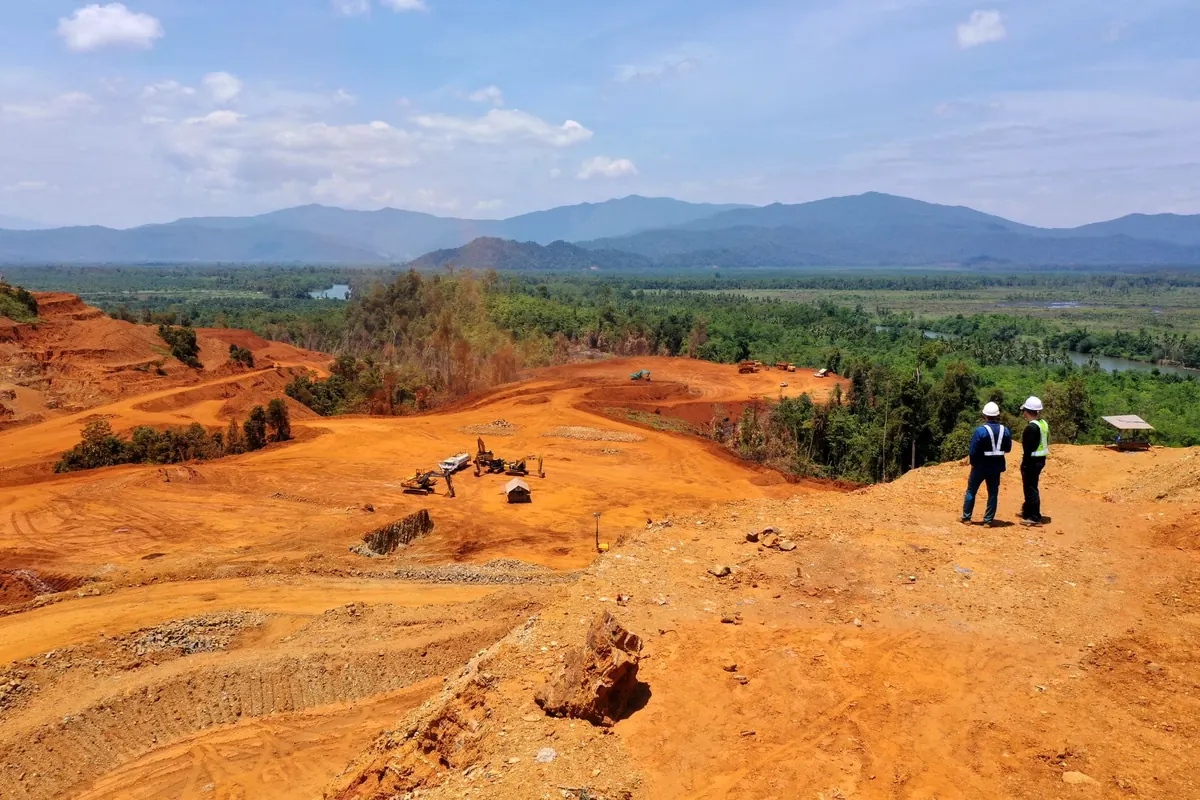


Seasonal Planning for Cobalt Mining: Weather, Logistics and Safety

Cobalt is rarely mined somewhere with a gentle climate. The Copperbelt swings between drenched and dusty. Northern Canadian and Nordic operations work around freeze-up, spring thaw and long dark shifts. Australian and Philippine sites plan around heat, monsoon and cyclone seasons. None of this is a surprise, yet seasonal weather still catches out projects that treat the calendar as background noise rather than a constraint to design around.
Good seasonal planning is not a weather diary. It is a set of decisions made months ahead: where to stockpile, when to move concentrate, which roads to harden, how many people to keep on site, and what conditions trigger a shutdown. Get those right and the wet season becomes a cost line rather than a crisis.
Why the season belongs in the mine plan
Weather affects cobalt operations on three levels at once. It changes what the pit or underground working can physically produce. It changes how material moves off site, whether by haul road, rail or port. And it changes the risk profile of every task your crews carry out. Planning for only one of those is how sites end up with a full stockpile and no way to move it, or a transport contract that sits idle for four months.
The practical move is to build the seasonal calendar into the annual budget and the production schedule at the same time. If you know the haul road will be unusable for a stretch, that is a stockpiling decision made in the dry season, not a September problem.
Wet seasons: water, haul roads and the pit floor
Across the Central African Copperbelt, the rains typically arrive around November and ease off in April, though the exact timing shifts year to year. For an open pit, that means groundwater and surface water management becomes the dominant operational task. Sumps need capacity, pumps need redundancy, and benches need drainage that was designed for the worst week, not the average one.
Haul roads and ground stability
Unsealed haul roads deteriorate fast once saturated. Rutting slows cycle times, increases tyre wear and raises the risk of a loaded truck sliding on a gradient. Where possible, prioritise gravel capping on the steepest sections and the busiest junctions, and keep a grader and roller on standby through the wet months. On the walls, watch for slumping and seepage after heavy falls — a pit wall that looks fine in October may behave very differently in January.
The other half of the year
The dry season brings its own pressures: dust suppression, water availability for processing, and heat stress for crews working in full PPE. In parts of southern Africa, dry-season bush fires near site boundaries can threaten power lines and surface infrastructure, so keep firebreaks maintained and have a clear response plan. Dust control matters for health as well as visibility, and anyone with concerns about exposure should speak to a qualified occupational health professional.
Freeze-up, thaw and the northern calendar
In Canada, Finland and other northern jurisdictions, the seasonal risks invert. Winter brings ice on walkways and benches, reduced daylight, and frozen ground that can actually help haulage on designated winter roads. Spring is the difficult season: melting snow feeds water into underground workings, soft ground causes rutting, and many road authorities impose reduced axle weights during the thaw. If your outbound concentrate moves by road in that window, you need to know the load restrictions in advance and have a plan for holding material until they lift.
Summer is not automatically easy either. Wildfire smoke can affect air quality, visibility and worker health, and evacuation planning deserves a rehearsal before the season starts rather than during it.
Logistics: move tonnage when the road allows
Transport is usually where seasonal planning pays for itself fastest. Cobalt often travels a long chain — mine to stockpile, stockpile to railhead or border, then port — and a single weak link can stall the whole sequence. Worth reviewing before each season:
- Road conditions and restrictions. Confirm weight limits, closure patterns and any permit requirements on the routes you depend on.
- Stockpile strategy. Build site stock ahead of the rains so production does not stop when trucks cannot move.
- Critical spares and reagents. Order pumps, tyres, flocculants and fuel before access roads deteriorate, not after.
- Border and port congestion. Queue times often lengthen in peak season; factor that into delivery commitments.
- Alternative routing. Have at least one fallback for each critical leg, even if it costs more to use.
- Contract terms. Make sure haulage agreements account for seasonal downtime rather than assuming year-round throughput.
The cheapest haul road repair you will ever do happens six weeks before the rain starts.
Safety planning that shifts with the season
Risk assessments written once and filed away are close to useless. The hazards genuinely change through the year, and toolbox talks should change with them.
- Wet season: slips and falls, vehicle rollovers on soft ground, lightning near exposed equipment, poor visibility, and drowning risk around sumps and open water.
- Dry season: heat stress and dehydration, dust exposure, fatigue on long shifts, and fire risk around plant and fuel storage.
- Winter: ice on stairs and walkways, cold stress, reduced daylight, and vehicle handling on compacted snow.
- Thaw: unstable ground, water ingress, and higher traffic volumes on roads shared with the public.
Two habits help more than any checklist. First, review weather forecasts daily at the pre-start meeting and give supervisors the authority to stop work when conditions turn. Second, record every weather-related near miss — they are the cheapest lessons available.
Building a seasonal calendar for your site
- Pull several years of local rainfall, temperature and wind records, and mark the realistic start and end of each season.
- Map those windows against your production targets, haulage routes and processing water balance.
- Identify the critical windows where an interruption would hurt most, and treat them as fixed constraints.
- Set pre-season deadlines: road works, drainage clearing, stockpile build, spares delivery, training refreshers.
- Agree trigger thresholds — rainfall totals, wind speeds, road conditions — that prompt specific actions.
- Review the calendar monthly, and rewrite it after each season using what actually happened.
Start with last year's worst week
If you want a quick test of how ready your operation is, take the worst week of weather from the past two years and ask three questions: what stopped, what did it cost, and what would we do differently? The answers usually point to a handful of cheap, unglamorous fixes — a hardened access road, a bigger sump, a spare pump, a stockpile built a month earlier.
Seasonal planning is not about predicting the weather. It is about making sure that when the rain, ice or heat arrives, the decisions were already made. Do that, and the calendar stops being a threat and starts being a schedule.
Photo: Usame Dzinovic / Pexels